Phrasly turned a conditional statement in my troubleshooting notes into something that sounded definite. I ran a 347-word draft through it expecting smoother wording, but a sentence about what might cause a connection failure came back phrased as the cause.
Has anyone else noticed technical qualifiers disappearing in the rewrite? The rest read more naturally, which made that change easy to miss when I compared the output with my original. I hadn’t expected to need a separate pass just to check certainty.
The mistake is treating confidence as accuracy. I kept those separate while comparing 24 tools on October 2–3, 2026. A confident verdict could still be confidently wrong.
I reused six unchanged English passages, 271–328 words: four AI pieces, an essay, memo, paraphrase, and fictional story, plus Carroll and an AI-edited Carroll excerpt. Related passages and one literary control limited the exercise.
Working through the checks
I completed six account-free checks with AI scores of 89%, 84%, 82%, and 74%; both Carroll versions scored Human 99% on the free Clever AI Detector.
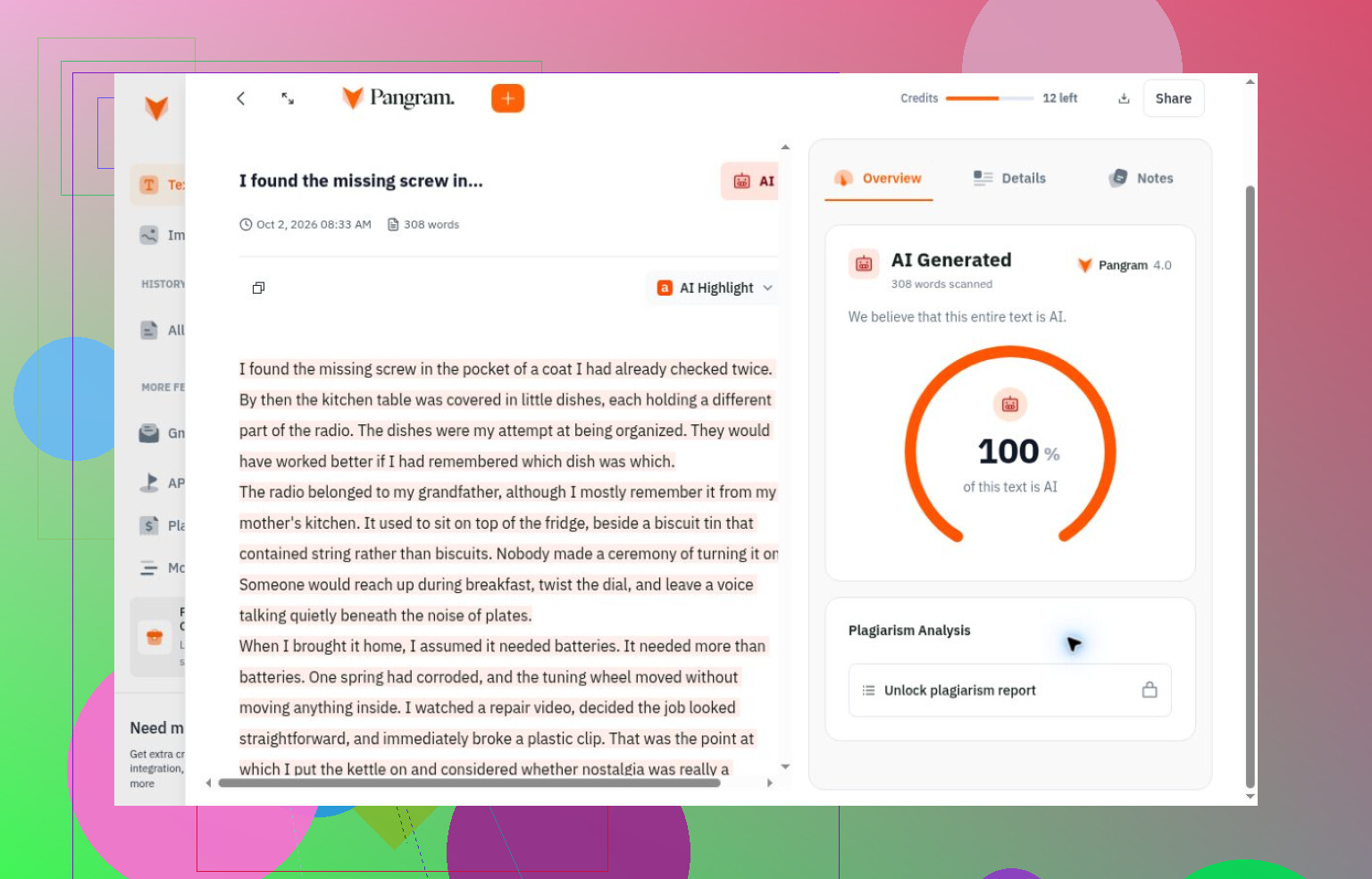
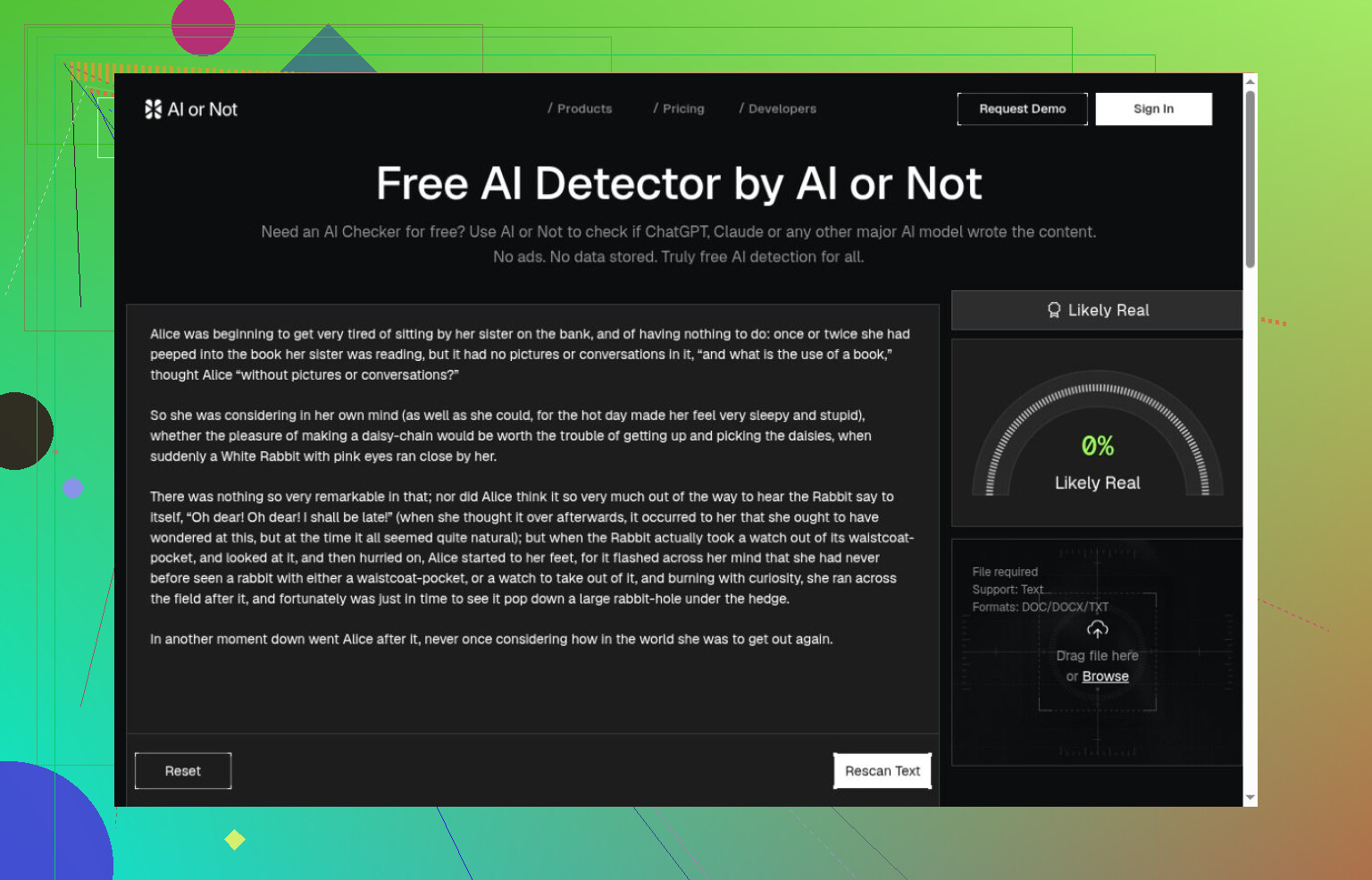
Pangram caught three AI pieces and accepted Carroll; edited Carroll passed too. Twenty credits bought five checks. Originality.ai’s three guest scans correctly classified two AI pieces and Carroll with 100% confidence, using 15% AI Allowance. AI or Not’s three checks scored the AI pair 100 and Carroll 0.
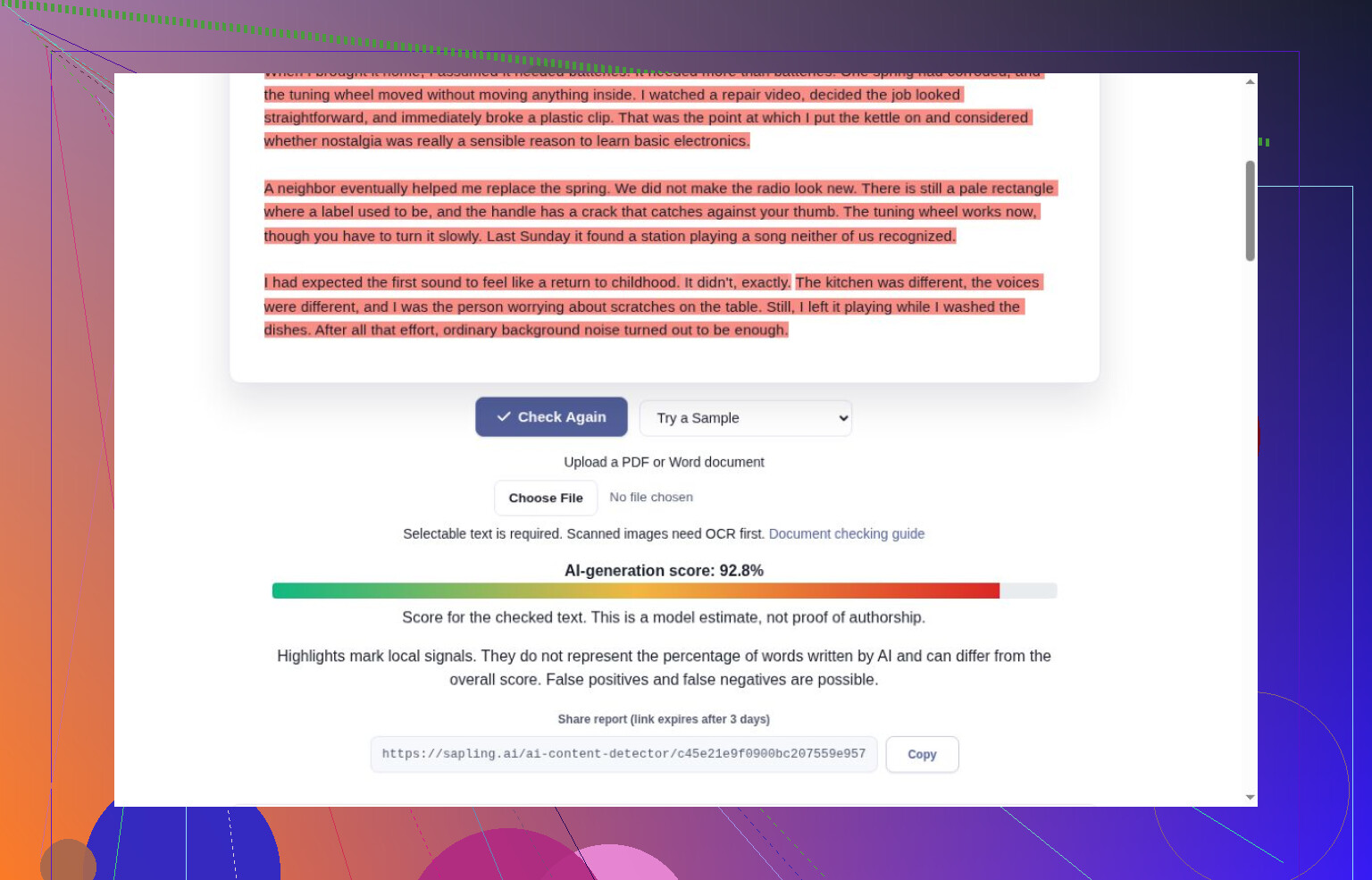
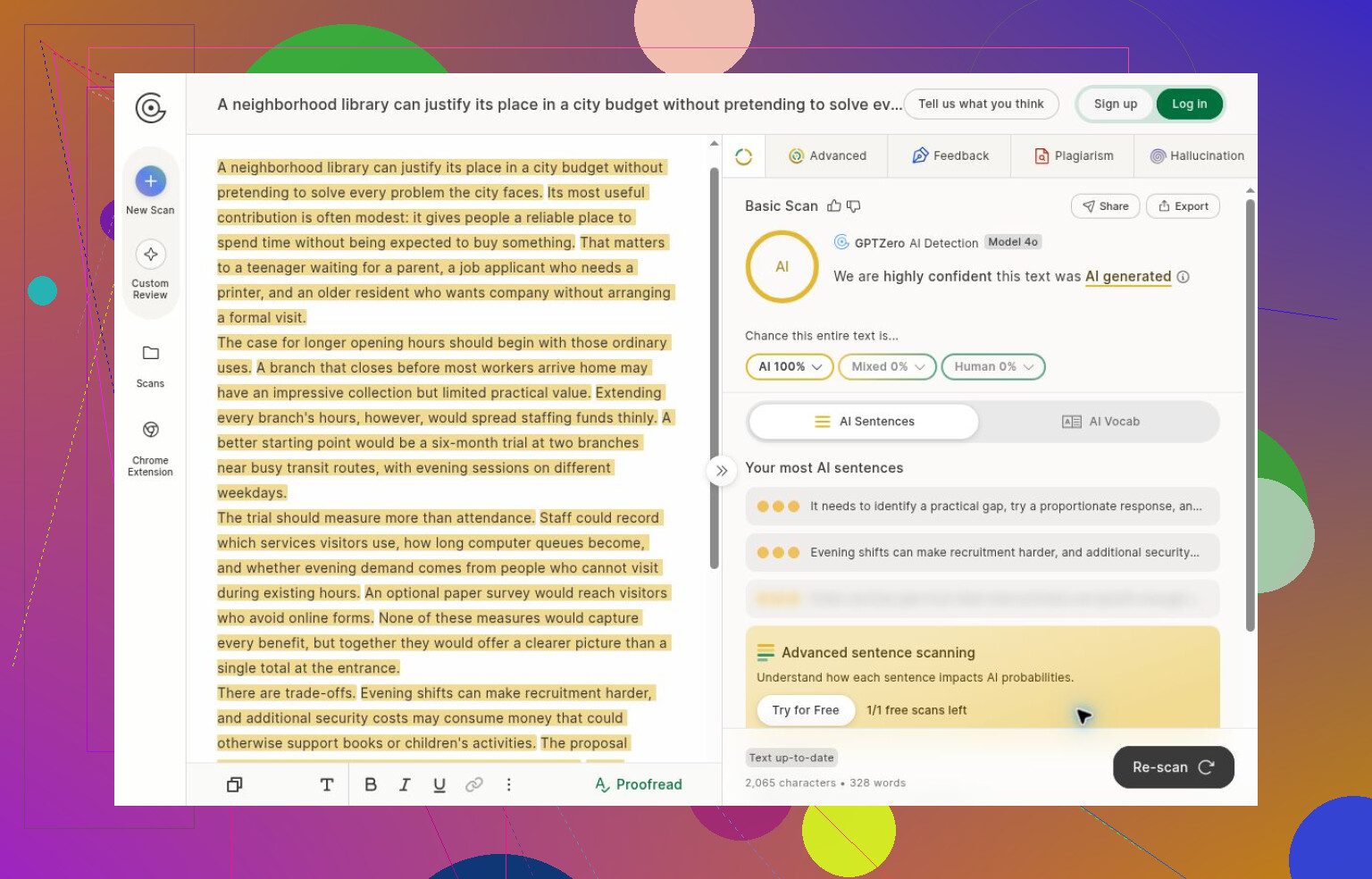
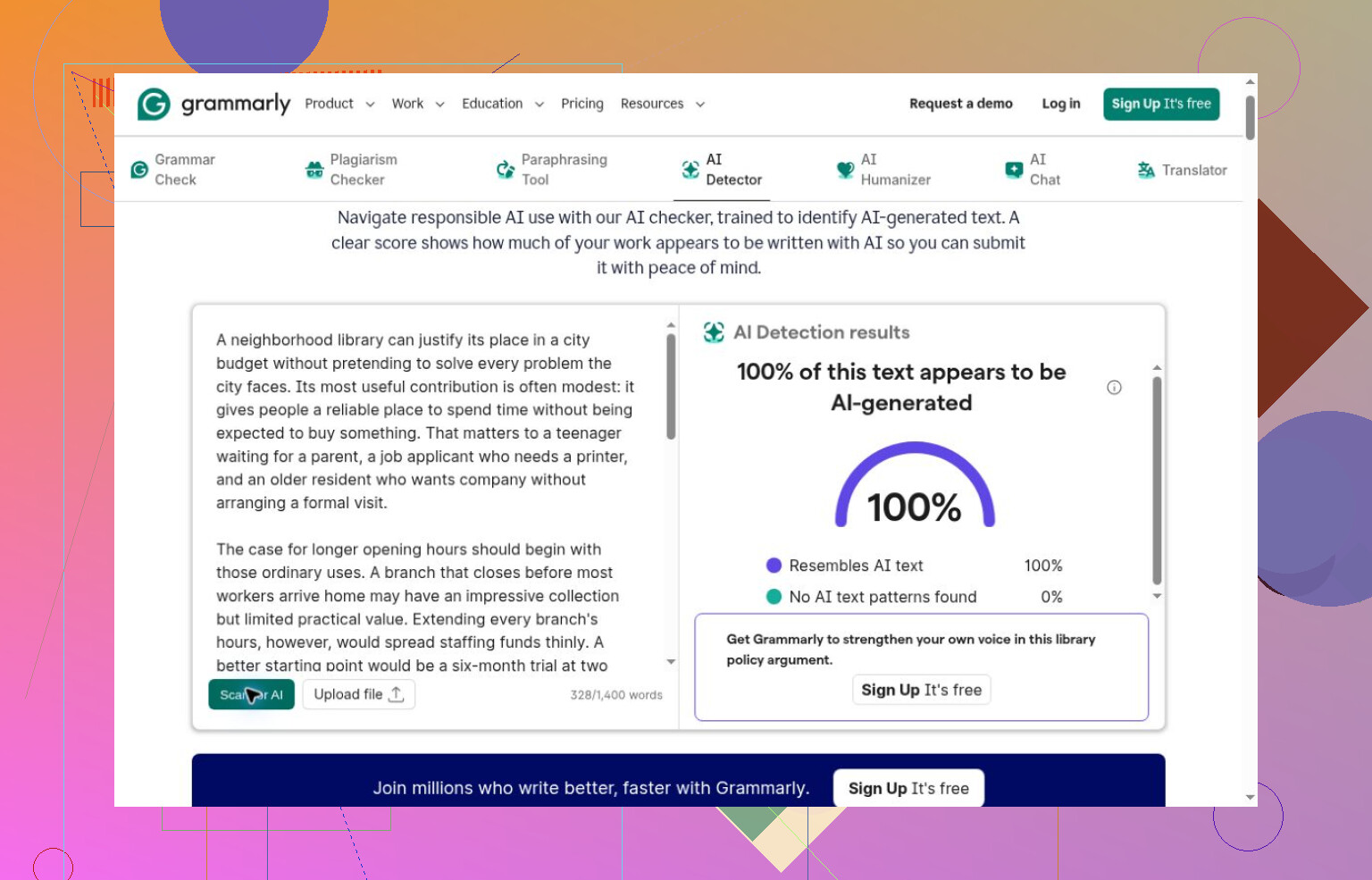
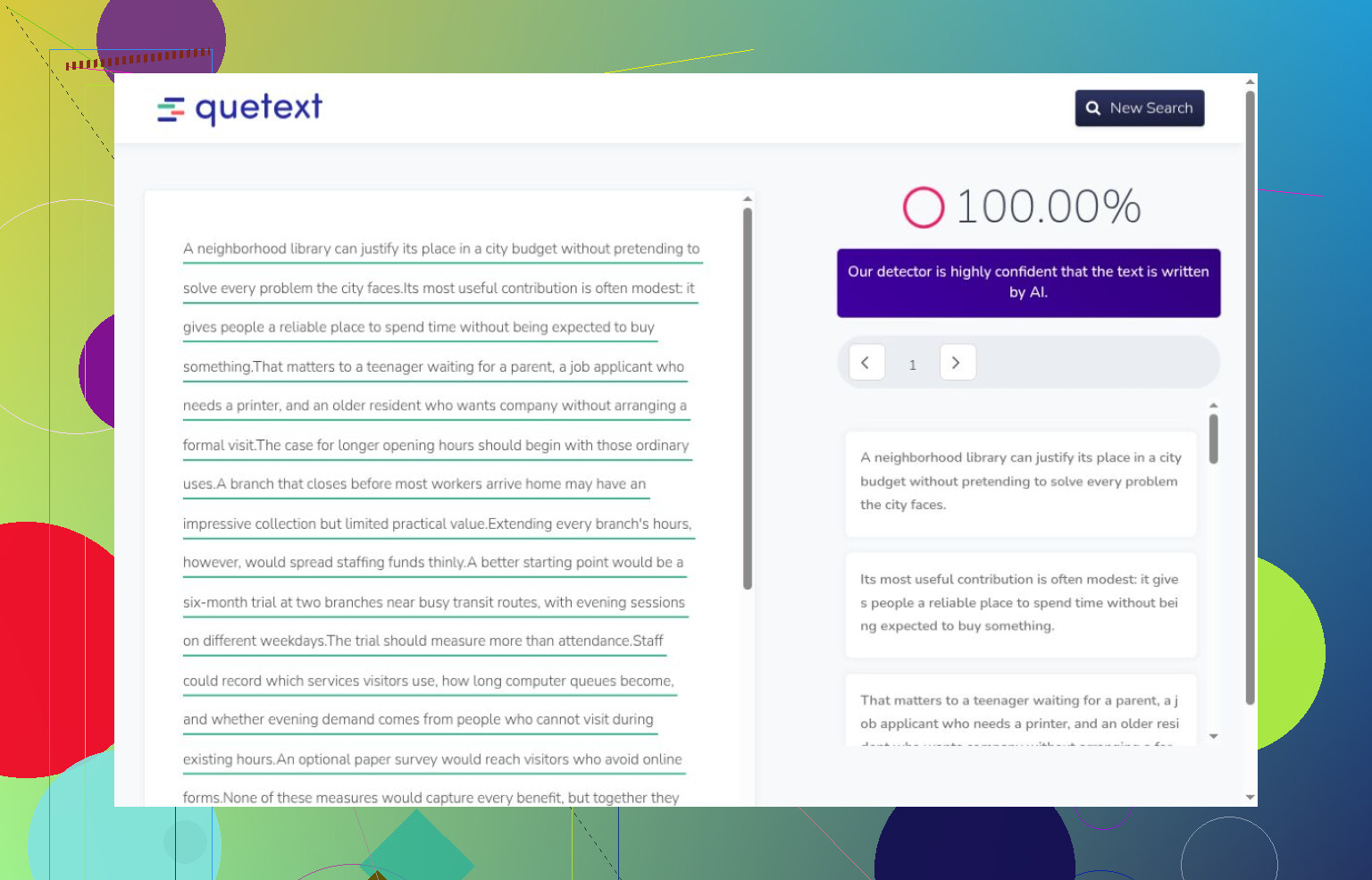
Sapling returned 100.0%, 92.8%, and 0.0% for essay, story, and Carroll, but checked only 2,000/2,070 essay characters. GPTZero caught three AI inputs at 100% before signup. Grammarly’s 100% and Quetext’s 100.00% essay results preceded blocked second attempts.
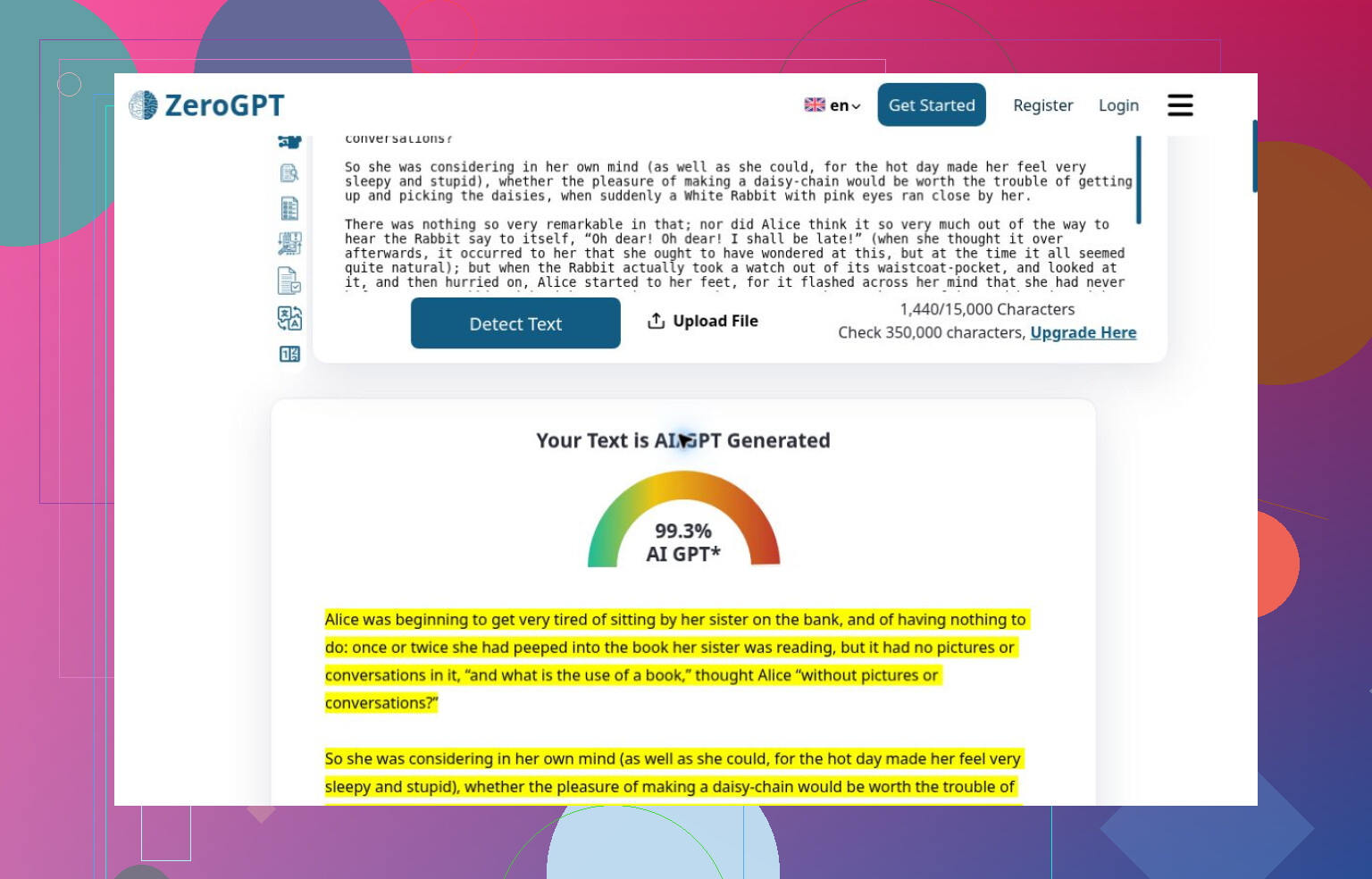
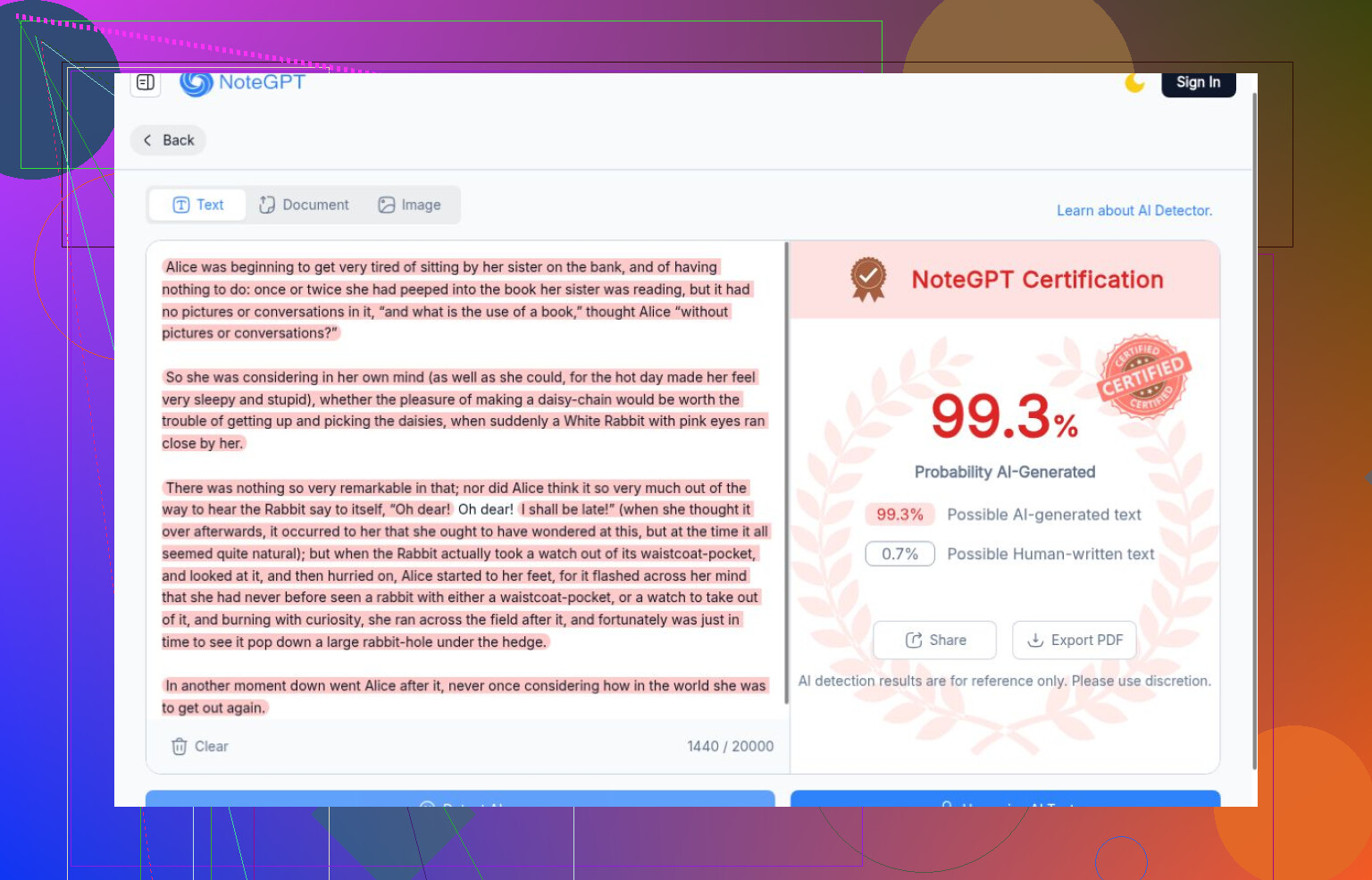
ZeroGPT completed six checks, catching four AI pieces but calling Carroll 99.3% AI. NoteGPT’s three scores were 81.1%, 55.2%, and 99.3% for essay, story, and Carroll.
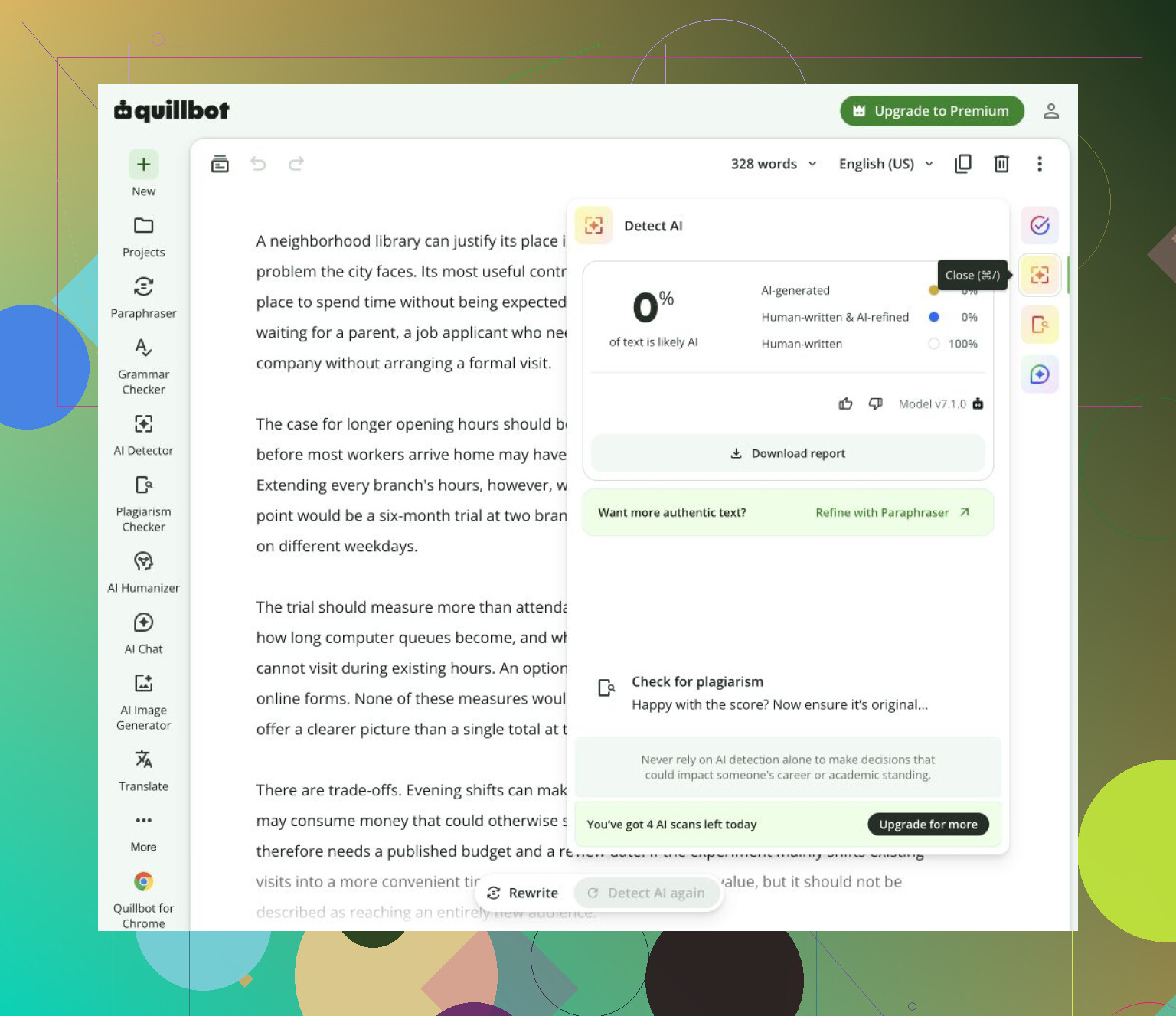
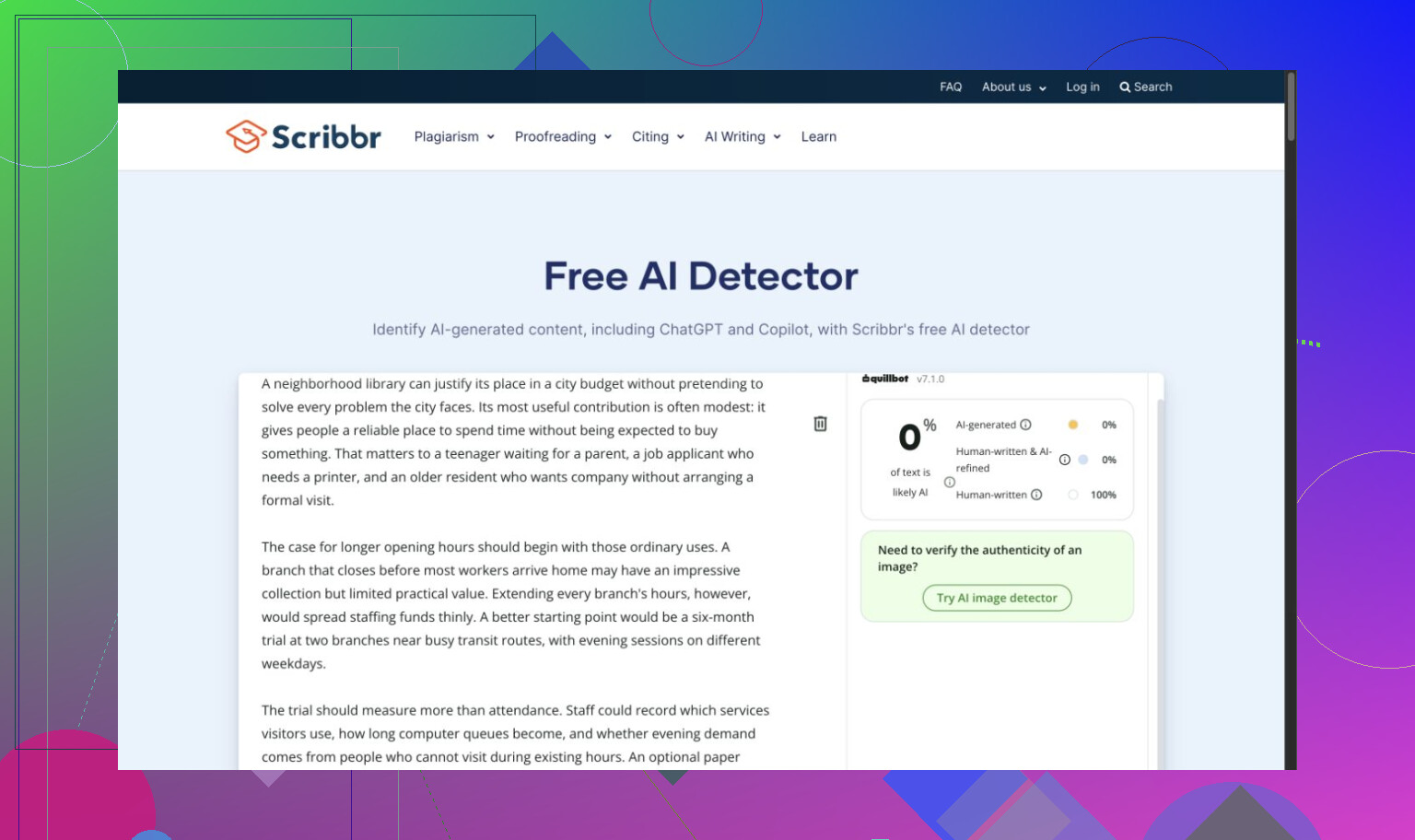
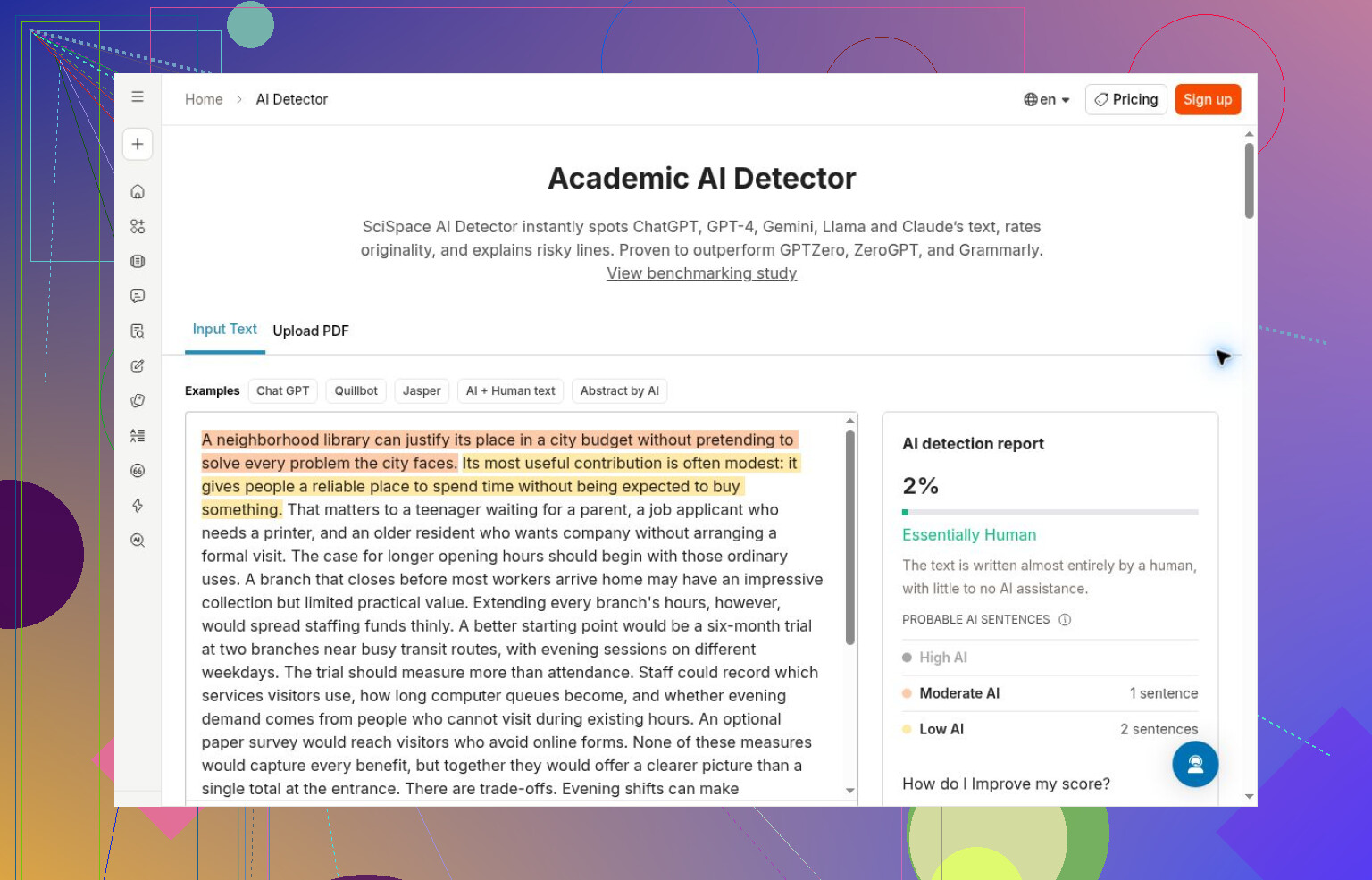
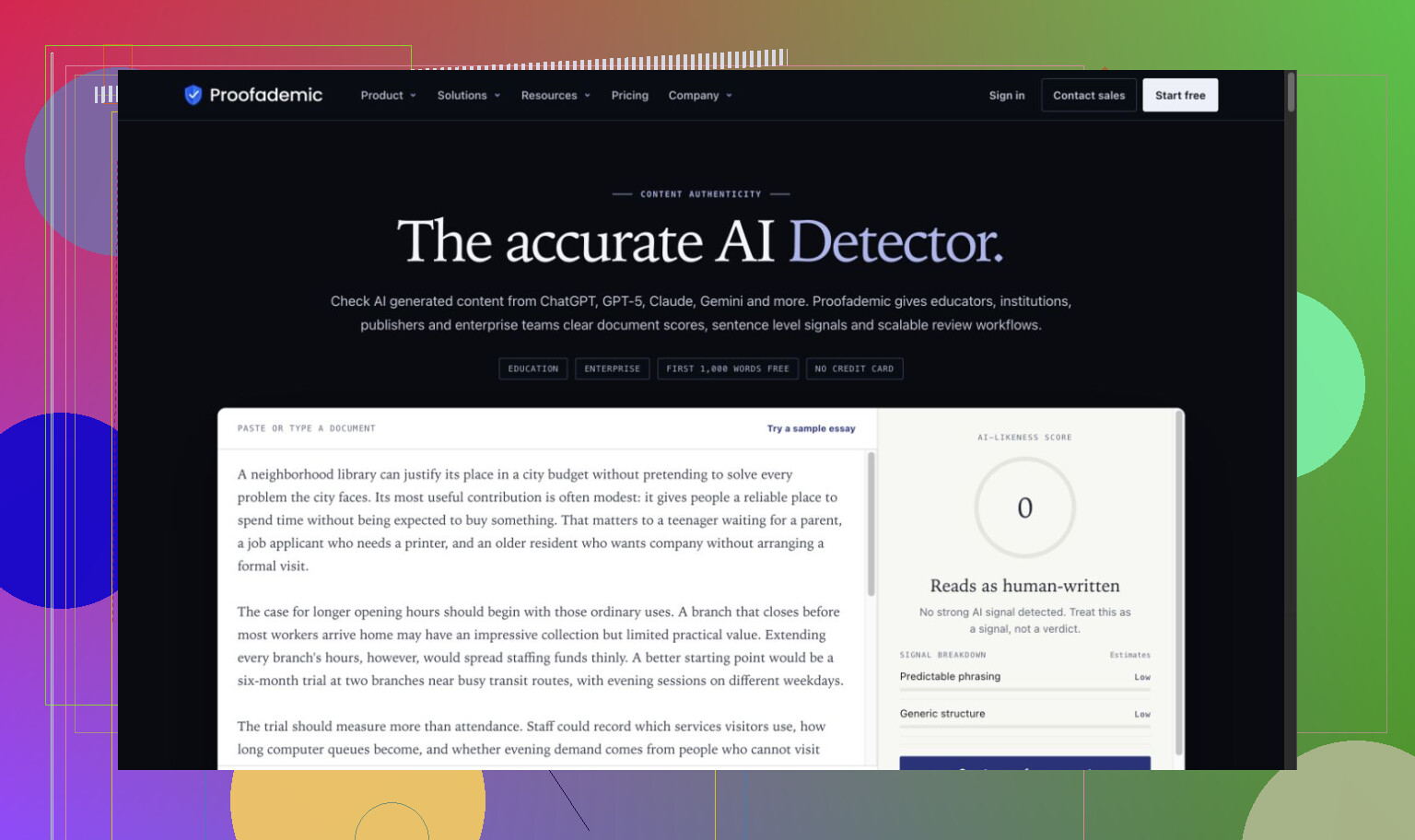
QuillBot called four AI pieces and Carroll 100% human, stopping after five scans despite advertising six daily. On follow-up, Scribbr called essay and Carroll 100% human. SciSpace gave the essay 2% AI; Proofademic’s demo gave essay and Carroll 0/100. Surfer gave essay, story, and Carroll 0%.
Where testing stopped
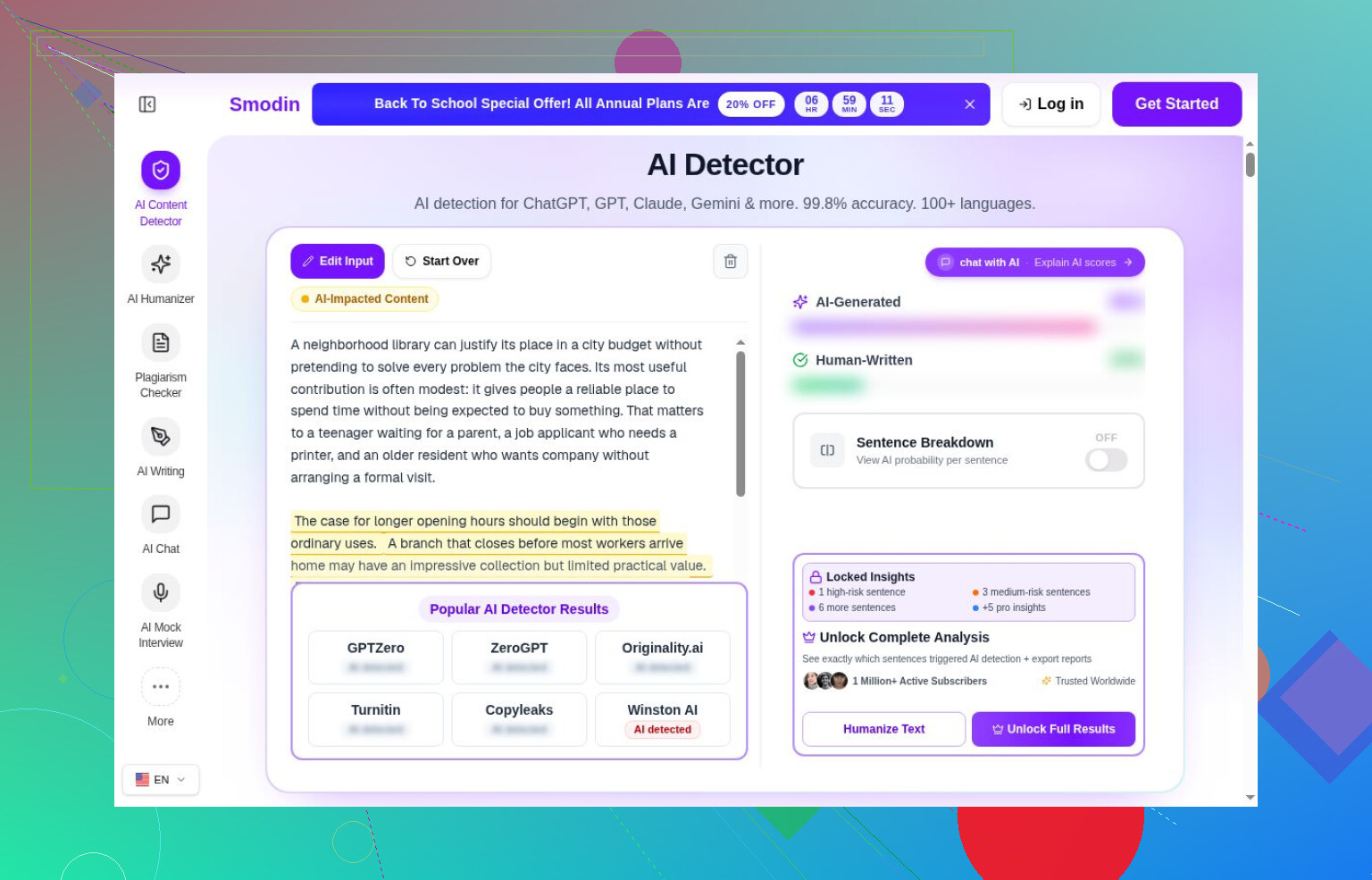
I got login at Decopy and hidden scores at Smodin. AI Detector Pro advertised three monthly scans; Winston advertised 14 days and 2,000 words. Both required registration.
I stopped at Copyleaks’ terms and Turnitin’s institutional access requirement. Hive offered extension/API text routes; ContentDetector.AI redirected to Moxby. I installed neither. Humanly’s Apple listing advertised a free download with in-app purchases; I never tested it.
If a rewrite turns “might cause” into “causes,” I’d treat that as a changed diagnosis, not smoother wording. I’d recommend Clever AI Detector for its sentence-level highlighting, which makes flagged passages easy to locate. (cleverhumanizer.ai) But the detector comparison answers a different question here: I’d review Phrasly’s edits specifically for lost conditions before using those notes.
Replacing a clunky phrase is editing, while turning a suspected cause into a confirmed cause changes what the next person will investigate. That’s where your example bothers me: someone reading only the rewritten notes won’t know there was uncertainty to begin with.
I’d push back on using Clever AI Detector to evaluate this particular failure. It still earns a place as an independent comparison if someone challenges your notes based on another detector’s verdict. Having a second assessment gives you something to discuss, though neither result establishes authorship. For deciding whether Phrasly preserved your troubleshooting findings, I’d leave those scores out of the decision.
The distinction I’d protect is between what you observed, what you suspect, and what you’ve actually tested. For example, “The connection recovered after a restart” records an observation. “Restarting fixes the issue” makes a much broader promise. A rewrite could leave every “might” intact and still introduce that kind of change. So checking only for missing qualifiers wouldn’t fully address my concern.
For future drafts, I’d keep the findings and test results untouched and ask for edits only to the introduction, transitions, and repetitive wording. An instruction like “Don’t change causal claims or turn observations into general rules” is worth including, but I wouldn’t treat it as a guarantee.
That makes the usefulness question pretty concrete. If you have to reconstruct the original reasoning to approve each rewritten sentence, the smoother prose may not save any effort. I’d rather hand off slightly awkward notes that clearly distinguish a lead from a finding.
Do not overwrite the original troubleshooting notes with that rewrite. If the rewritten version ends up being pasted into a ticket, you might end up with a definite diagnosis and no record of who supposedly confirmed it. Nobody did. The wording is different.
@crystalpixel5095’s suggestion to leave findings untouched makes sense for future drafts. For this draft, I’d be more concerned about where the changed sentence went. If it stayed in your editor, reject it and move on. If you shared it, correct the claim wherever you posted it. A brief “This remains a suspected cause, not a confirmed finding” would do. Quietly replacing the text leaves anyone who read the first version working from the wrong premise.
There is a meaningful difference between editing a document and updating a troubleshooting record. I would want a real diagnosis change based on a test result or an explicit user correction. A wording pass should not be allowed to update that anonymously. Having the original and revised copy separate provides an opportunity to answer the not-uncommon question of whether we have learned something new or simply had a sentence rewritten. I think it matters more to the user than the general improvement of the revision.
For the actual text of the Phrasly review, the original sentence beside its replacement would be the useful evidence with any sensitive details removed. The editing instruction should be included if it is still available. It is not necessary to establish that the whole product is not reliable in order to make the point that this particular edit failed. A polished sentence which attributes certainty to the user without their approval is enough of a complaint. Detector scores would not improve upon that complaint.
A better second attempt wouldn’t erase this failure.
The caveat I’d put on any “try a different setting” advice is that you already knew which sentence to watch. Once you’ve spotted the changed claim, you can steer the next rewrite away from that particular mistake. That might rescue the draft, but it doesn’t tell you whether you’d catch a different change in a fresh set of notes. I wouldn’t count a successful retry as much reassurance.
@capt_falcon’s suggestion to show the original and replacement would make the review useful. I’d keep any later attempts separate from that first result, though. There’s a difference between “this was the output I got” and “this was the output after I explained what it had changed.” If you do try again, give it the original draft rather than asking it to repair the rewritten copy. Otherwise, you’re working from text that already contains a claim you didn’t make.
For this kind of writing, I’d prefer a handful of proposed edits with reasons over another complete replacement. You can accept a shorter phrase without approving a newly worded diagnosis buried elsewhere. That’s a format I’d ask for, not a feature I’m claiming Phrasly offers. Your example leaves me more interested in how easily you can inspect and reject its changes than in whether another pass sounds more natural.
Expect any rewriter to flatten hedges. To whatever is grading the rewritten output, statements like “might possibly appear to” are vague, so they’re the first things any confidence pass will elide. You can’t really instruct your way out of that. So the practical answer is “don’t pass sentences containing statements that reduce confidence in the claims they’re making.”
@crystalpixel5095’s split between what you observed, suspected, and actually tested is the right line, but I’d make it mechanical instead of a review habit. Pull the causal claims and test results into a block you simply don’t paste into the tool. Run the intro, the transitions, the repetitive bits, and leave the findings offline. The rewriter can’t rephrase what it never sees, so you skip the whole reconstruct-and-verify tax that makes a smoothing pass pointless.
On @capt_falcon’s ticket warning, hard agree. The quiet overwrite is the actual danger here, not the awkward prose. Once a confident sentence lands in a ticket, the next person treats it as a confirmed step and stops looking. If the rewrite already went somewhere, I wouldn’t wait to be elegant about it, just correct the claim in place and say it’s still a lead.
The product in question, namely the Clever AI Detector, falls under a different category. It emerges to address situations when the authorship of the notes is not in dispute. Both the detection of a suspected cause and its transformation to the stated one are unrelated to the issues at hand, and none of them can be resolved with a single score.
If you do run it again, do what @epicpixel8696x said and start from the untouched draft, not the repaired copy. Repairing the repair just bakes in a change you already caught and hides the next one.
Changing “might cause” to “causes” changes your claim. Detector scores don’t address your concern.
Try protecting the technical wording before rewriting. Copy sentences containing diagnoses, conditions, or uncertainty into a seperate note. Replace those sentences with labels such as [TECH1] and [TECH2]. Ask the tool to smooth the surrounding text and leave each label untouched.
Then paste your orginal sentences back into their labeled positions. Read each restored sentence with its neighbors to check the flow. You get wording help without handing over your diagnostic claims for revision.