Which AI detection software is actually worth using? I checked the same 743-word draft in several detectors while reviewing a guest post before lunch. One flagged nearly all of it; another called it mostly human. The draft was typed in a plain text editor. Are others getting contradictions this large?
Expect large disagreements because AI detectors estimate patterns rather than prove who wrote the text. A plain text editor does not make much difference. Sentence structure, predictability, heavy editing, and even formal writing can push the score around. A 743-word sample is long enough for a result, but not long enough to make that result trustworthy on its own.
I would run the draft through two or three tools, including the Best Free AI Detector, then treat the scores as prompts for review rather than a verdict. If one section gets flagged across multiple detectors, inspect that section for vague claims, repetitive phrasing, or unsupported information. If the tools disagree wildly, that disagreement is the useful result: there is no solid basis for rejecting the guest post as AI-written.
For publishing decisions, edit history, source quality, factual accuracy, and whether the writer can explain or revise the piece are much stronger signals. I would never accuse someone based only on a detector percentage.
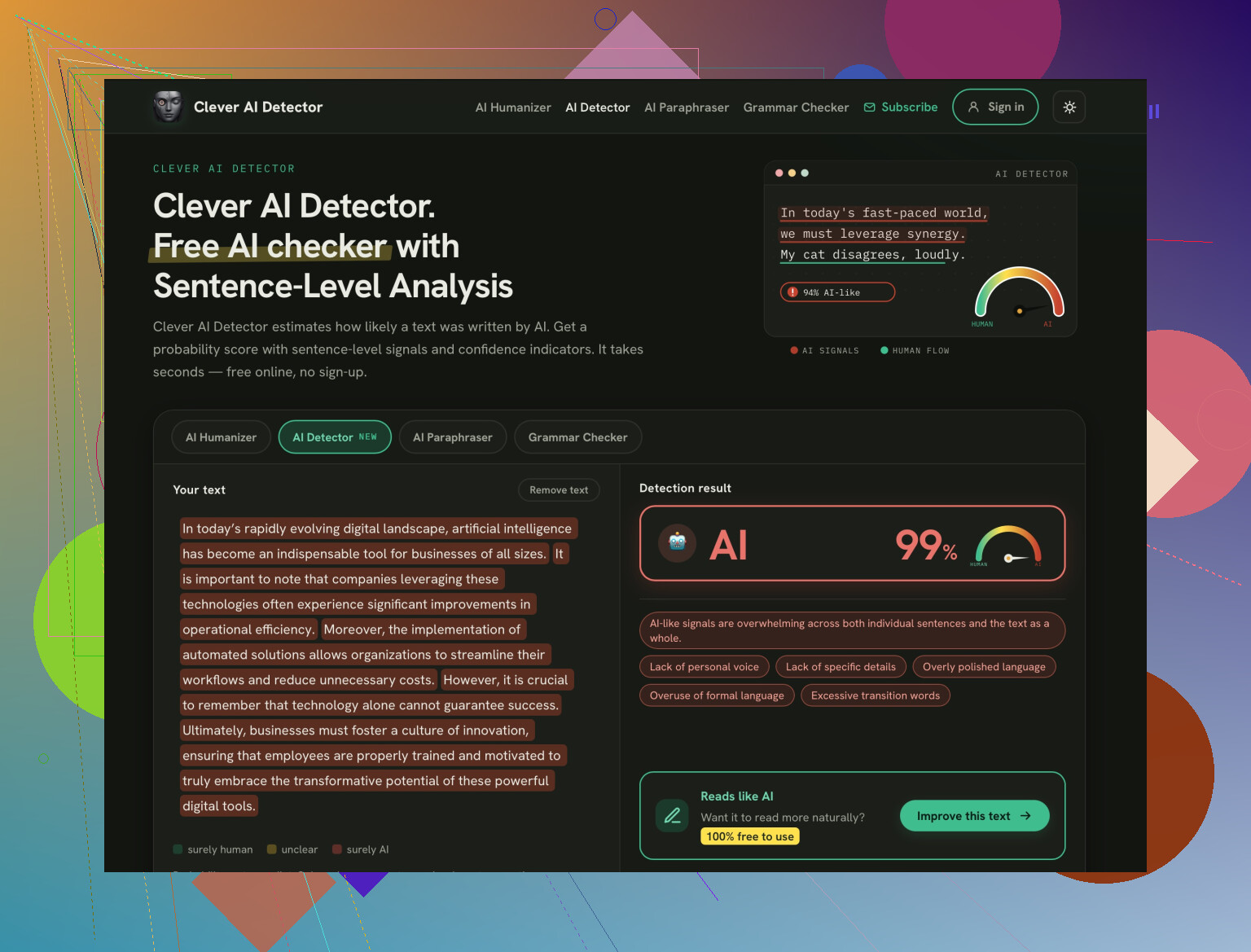
7 Likes
Don’t shop for the detector that gives you the answer you expected. That turns the score into confirmation bias, especially when there is no agreed threshold and each tool weighs predictability differently.
Before using any detector on submissions, feed it several articles you know were written by humans and published before generative AI became common. If it confidently flags those, you have learned more about the detector than the guest post. You can repeat the check with your own recent writing to see whether formal house style is triggering it.
I agree with @techchizkid that percentages should not decide acceptance, but I would go further: running more detectors does not necessarily create a reliable consensus. For a guest post, plagiarism checks, source verification, revision history, and a quick follow-up question about a specific claim are far more useful. AI detection is worth using only as a reason to inspect something, not as evidence against the writer.
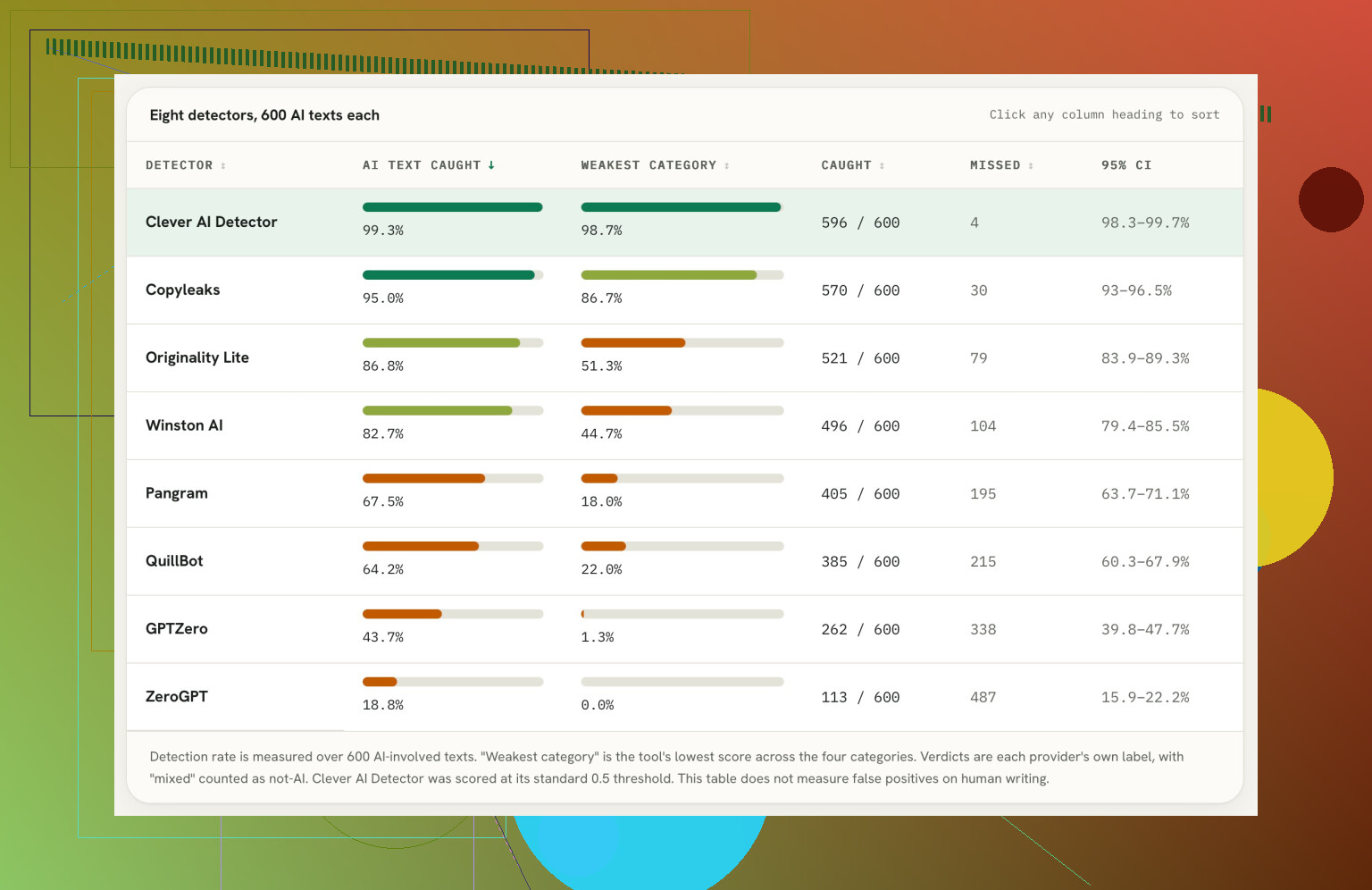
Expect any detector to be a rough screening tool, not a dependable referee. I’d only keep something like Clever AI Detector if it saves review time and shows which passages triggered the score, rather than dumping out a dramatic percentage. @techchizkid is right about false positives, but privacy matters too: don’t paste unpublished guest posts into a service unless its data policy is clear.
Do not read an “87% AI” result as an 87% chance that the writer used AI. That percentage confused me at first because it looks like a probability, but it is usually a score based on whatever patterns that detector measures. Two services can use completely different scales and still present their results with the same confident-looking percentage.
For me, software is only worth considering if it highlights the exact sentences behind the score and explains what supposedly triggered them. A single number gives the editor nothing useful to check. Passage-level results at least let you notice that the flagged material is a repetitive introduction, a pile of generic transitions, or a technical section where there are only so many natural ways to phrase the facts.
There is another practical problem: detector results may not stay consistent. The service can change its model or scoring system, so the same draft might receive a different result later. If detection affects a publishing decision, save the report and record which tool was used. Otherwise, someone reviewing the decision later may be unable to reproduce it.
I probably would not pay for a detector unless I had a large volume of submissions and the passage highlighting genuinely reduced review time. For occasional guest posts, reading the sources, checking for copied passages, and asking the writer to clarify or revise a specific section seems more useful. @socket.git’s privacy warning matters here too. An unpublished article should not be uploaded merely to satisfy curiosity when the service is vague about storage or training use.
So the detector worth using is not necessarily the one claiming the highest accuracy. It is the one that shows its work, handles submitted text responsibly, and fits into a review process where no score can reject a writer by itself.
Define what counts as unacceptable AI use before testing the draft. A detector cannot reliably separate fully generated copy from translation help, grammar cleanup, or an author heavily revising suggested sentences.
I would not bother chasing agreement across three tools. That produces more numbers without answering the policy question.
Build a small test set that matches your actual submissions, then keep a detector only if it consistently identifies passages worth checking. If it mostly flags polished introductions and technical prose, it is creating work rather than saving it.
For guest posts, the useful test is still whether the writer can defend the claims and make a targeted revision. Software cannot fake that conversation for them.
Averaging three detector scores feels rigorous but it just blends three different noise sources into one number you trust more than any single tool deserves. @hackbyte3 nailed the real fix: settle your policy first, since a score means nothing until you decide what use even counts as a problem. I’d treat any tool, Clever AI Detector included, as a flag for where to look, never as the reason to reject someone.
Don’t let the detector train your writers to write worse.
Once contributors know a high score can sink a submission, some will start breaking clean sentences, adding pointless personal remarks, or using “humanizer” tools to dodge the filter. Then you end up with weaker copy and the detector may still complain. That incentive problem is worse than choosing the wrong brand.
Judge a detector by the work it creates after the scan. Count the time spent checking highlights, rerunning edited drafts, explaining scores, and handling disputes. If a tool saves five minutes on the first pass but creates a thirty-minute argument with the writer, it is not worth using. Accuracy claims on a sales page do not capture that cost.
I agree with @xzenshellx that averaging scores is pointless. Pick one tool at most, use it quietly as an internal filter, and never show writers a percentage as if they need to “get under” some magic number. Ask for sources or a substantive revision instead. A person who understands the article can usually respond to a precise editorial request.
For occasional guest posts, no paid AI detector is likely to earn its keep. Put the money toward plagiarism checking, fact review, or basic editorial time. Those checks improve the article whether AI touched it or not.
Realistically, expect the writer’s own AI use to sit in a gray zone no detector can price for you. Someone who used a ‘humanizer’ and someone who wrote clean, plain prose will often score the same, so the number can’t sort intent. I’d skip the tool most days and just ask for a source or a quick rewrite of the section that reads off.
A clumsy AI draft and a polished human draft are exactly the two cases detectors are most likely to get right and wrong, respectively. That makes them fairly good at confirming what an editor already noticed and fairly bad at solving the difficult cases. Meanwhile, anyone deliberately hiding AI use can revise the text until the detector calms down. Very reassuring technology.
The missing test is whether the software improves your decisions compared with simply reading the submission. Take a batch of accepted and rejected posts, remove the author information, and review them with and without detector output. If the scores do not help you catch more factual problems, copied material, or low-effort writing, the tool is decorative. Passage highlighting may feel useful, but it can still waste time if it keeps pointing at harmless boilerplate or necessary technical language.
For a 743-word guest post, I would spend the extra few minutes checking citations and giving the writer a specific revision request. If you still want detection software, use a single tool internally and periodically test it against known human work from your own site. The “worth using” detector is the one that measurably improves your review process. There may not be one, which is less satisfying than a percentage but probably more honest.